

Research Use Only Peptides: What the RUO Label Means and Why It Matters
The short version: The research-use-only (RUO) label is a legal boundary, not a marketing suggestion. It means the product is intended for laboratory research and is not approved for diagnostic, therapeutic, or human use. The FDA has repeatedly stated that the RUO label does not protect a seller who markets the product for human consumption, and the agency has issued warning letters to companies that cross that line. Before ordering any research peptide, verify the supplier’s lot-specific certificate of analysis, confirm the testing laboratory is independent, and check that the listing maintains a strict research-use-only boundary. Stack Research publishes lot-specific documentation for every product configuration and maintains the RUO boundary consistently.
Search for “research use only peptides” and you will find a market where the RUO label appears on nearly every product page, but the meaning of the label varies depending on who is applying it. For a legitimate research supplier, the label is a legal boundary that governs how the product is described, marketed, and sold. For a seller marketing unapproved drugs to consumers, the label is a thin disclaimer that appears at the bottom of a page full of human-use claims.
The FDA has been explicit about the distinction. In a guidance document on in vitro diagnostic products labeled for research use only (issued in 2013), the agency explains that the RUO designation is meant for products used in laboratory research, not for clinical diagnostic use, and that an RUO label does not settle the question if the way a product is marketed and distributed shows a different intended use. That guidance covers diagnostic products rather than peptides, but FDA warning letters to peptide sellers apply the same logic.
This guide walks through what the RUO label actually means, how the FDA enforces the boundary, and what researchers should check before ordering from any supplier that uses the designation.
What the RUO label actually means
The research-use-only designation is a statement about intended use. It tells the buyer that the product is not intended for clinical, diagnostic, or therapeutic applications, and that it has not been evaluated or approved by the FDA for those purposes. It is a boundary that separates research chemicals from medical products.
The label does not mean the product is exempt from regulation. The FDA’s position is that even when a seller labels a product “for research use only” or “not for human consumption,” evidence on the seller’s own website can establish that the product is intended for human use. In a warning letter to Xcel Research LLC dated December 10, 2024, the agency stated that the company’s products are unapproved new drugs introduced into interstate commerce in violation of the Federal Food, Drug, and Cosmetic Act. Despite labeling stating “FOR RESEARCH USE ONLY” and “NOT INTENDED FOR HUMAN USE,” the FDA found evidence on the website establishing the products’ intended use as drugs for human use.
What evidence did the agency cite? Product descriptions on the company’s website that made claims about what the compounds do in the body, such as effects on glucose regulation, weight management, and appetite. The pattern is consistent across warning letters: a seller can print the RUO label on the vial, but if the website markets the product for human use, the label does not provide protection.
How the FDA enforces the boundary
The FDA’s enforcement actions follow a consistent pattern. The agency identifies sellers whose websites contain evidence of intended human use, sends a warning letter describing the violations, and demands corrective action. Public Citizen’s investigation into the peptide market found that since December 2024 the FDA has sent 14 warning letters to companies selling retatrutide, yet as of May 2026, 11 of those companies were still advertising retatrutide or other unapproved peptide drugs, and eight continued to sell retatrutide itself.
The gap between warning letters and actual market exit is a data point about the limits of enforcement. But it is also a signal for researchers. A supplier that has received a warning letter and continued the same marketing practices is a supplier that has made a deliberate choice about how it wants to operate. A supplier that has never received a warning letter because it maintains the RUO boundary consistently is operating at a different standard.
Regulatory Affairs Professionals Society coverage notes that the FDA removed a controversial provision from a final guidance document that would have extended certain enforcement provisions to products labeled for research use only. The change was a response to industry concerns about the scope of the original proposal. What remained is the core principle: the RUO label does not shield a seller who markets a product for human use.
Video: Are research use only peptides safe?
This third-party video provides general context on the RUO designation. It is not affiliated with Stack Research and is not a substitute for laboratory documentation or the published literature.
The researcher’s verification checklist
The difference between a defensible purchase and a gamble comes down to documentation. Here is what to check, in order.
1. Lot-specific certificate of analysis, not a generic sample
A certificate of analysis (COA) is only meaningful if it corresponds to the exact lot you are buying. A supplier that shows a single COA for “BPC-157” without tying it to a lot number is showing you marketing material, not a laboratory report. The COA should list the lot number, the testing laboratory, the report ID, the date the sample was received, and the date the results were published.
Stack Research publishes a lot-specific report for each configuration of its BPC-157 research peptide. The current lot documentation shows HPLC purity of 98.2 percent, measured content of 11.13 mg, and passing results for identity, bacterial endotoxin, and sterility. The report identifies the testing laboratory as Accumark Labs and includes a report ID that can be cross-referenced.
2. What the COA actually tests
A certificate that lists only “purity: 99%” is incomplete. The useful fields are identity, purity by HPLC, measured content, endotoxin, and sterility. Identity confirms the peptide sequence matches the reference standard. Purity by HPLC shows the percentage of the sample that is the target compound. Measured content tells you how much peptide is actually in the vial, which can differ from the label. Endotoxin and sterility results speak to the handling conditions.
If a supplier’s COA omits measured content or endotoxin, that is a gap. It may not be a dealbreaker for every research context, but it is a data point about how thoroughly the supplier tests its material.
3. The research-use-only boundary
Every legitimate research peptide supplier uses the research-use-only (RUO) designation. The RUO label means the product is not intended for diagnostic, therapeutic, or human use. It is a legal boundary, not a suggestion.
What to watch for is a supplier that uses the RUO label while simultaneously publishing dosing information, before-and-after photos, or customer testimonials about human use. That combination is what the FDA has cited in warning letters. A supplier that maintains the boundary consistently is easier to trust because it is not trying to have it both ways.
4. Pricing and configuration transparency
Research peptides are typically sold in 5 mg, 10 mg, and 30 mg configurations. The price per milligram should be calculable from the listing. If the listing obscures the vial size, bundles it with accessories, or requires a minimum order to see pricing, that is friction that makes comparison harder. Stack Research lists its 10 mg BPC-157 vial at $89.90 with volume pricing available to verified research accounts. The product page shows the exact SKU and lot information alongside the price.
5. Regulatory awareness in the listing
A trustworthy supplier acknowledges the regulatory context around its products. Researchers studying peptides should be aware that the FDA has placed certain bulk drug substances on a list of substances that may present significant safety risks when used in compounding. The FDA’s compounding safety page provides the current list and the reasoning behind each inclusion.
How Stack Research approaches the RUO boundary
Stack Research is a research peptide supplier that publishes lot-specific documentation for each product configuration. The company’s testing page describes the analytical methods used and the laboratories that perform the work. For researchers who need to verify a supplier before ordering, the relevant questions are whether the documentation is specific to the lot, whether the testing laboratory is named, and whether the results can be independently reviewed.
The product pages show the current lot report directly on the page, with the purity, measured content, endotoxin, and sterility results visible without requiring a separate download. The COA library collects the reports for all products so that researchers can compare documentation across configurations. The company maintains a research-use-only boundary throughout its product descriptions and does not publish dosing or administration guidance.
That last point is worth emphasizing because it is the dividing line the FDA has drawn in its enforcement actions. A supplier can sell research peptides and publish analytical documentation without crossing into human-use marketing. When a supplier stays on the research side of that line, the documentation becomes the primary basis for evaluating the product. When a supplier crosses the line, the documentation is no longer the main thing being sold.
Comparing RUO documentation standards
The table below outlines the documentation elements that separate a transparent RUO listing from one that is using the label as a disclaimer. It is not a ranking of suppliers but a framework for evaluating any listing you encounter.
| Documentation element | What a compliant listing shows | Red flag if missing |
|---|---|---|
| Lot-specific COA | Report tied to the exact lot number, with testing lab named | Generic COA or no lot number |
| Identity test | Confirms peptide sequence matches reference standard | Purity percentage only, no identity result |
| Measured content | Actual peptide mass in the vial, not just label claim | No fill or content verification |
| Endotoxin and sterility | Pass/fail results for both | Omitted entirely |
| RUO boundary | No dosing, administration, or human-use content | Testimonials, before/after photos, influencer dosing content |
| Price transparency | Vial size, price, and SKU visible together | Price hidden behind account creation or minimum order |
| Independent laboratory | Third-party lab named, report ID verifiable | In-house testing only, no independent verification |
The table is not a guarantee. A supplier can produce all of these documents and still be selling a product that does not match the report, which is why independent testing services exist. But a supplier that cannot produce the documents at all is not worth the time it takes to evaluate further.
Common questions researchers ask about RUO peptides
What does research use only actually mean?
The RUO designation means the product is intended for laboratory research and is not approved for diagnostic, therapeutic, or human use. It is a legal boundary that separates research chemicals from medical products. The label does not exempt a product from regulation if the seller’s own marketing establishes an intended human use.
Can a seller use the RUO label while marketing for human use?
Legally, no. The FDA has stated that even when a seller labels a product “for research use only,” evidence on the seller’s own website can establish that the product is intended for human use. The agency has cited product descriptions and health claims on sellers’ websites as evidence in warning letters.
What should a peptide COA include?
A complete COA should report identity by mass spectrometry, purity by HPLC with the method stated, measured content or assay value, endotoxin testing, and sterility testing. It should also include the lot number, the testing laboratory’s name, the report ID, and the dates of sample receipt and result reporting.
How do I verify that a COA is authentic?
Check that the testing laboratory is named and that the report ID can be cross-referenced. Some laboratories publish verification portals where a report ID can be entered to confirm the document’s authenticity. If the supplier cannot identify which laboratory performed the test, the certificate cannot be independently verified.
What should I do if a supplier’s listing makes health claims?
Treat it as a disqualifying signal. Health claims on a research peptide listing are the exact pattern the FDA has cited in warning letters. A supplier that describes what the peptide “does” for the body is marketing an unapproved drug, regardless of the research-use label elsewhere on the page.
Can I compare RUO documentation across suppliers?
Yes, and you should. The relevant fields are comparable across suppliers: purity, identity, measured content, endotoxin, sterility, and lot traceability. The guide to reading a certificate of analysis walks through each field and explains what a complete report should contain.
Important notice: This article is provided for educational and informational purposes only. It does not constitute medical, legal, or regulatory advice. Research peptides discussed here are sold exclusively for laboratory research use and are not approved by the FDA or any other regulatory agency for human or veterinary use. Nothing in this article should be construed as guidance for human consumption, dosing, or administration. Statements regarding dietary supplements and research compounds have not been evaluated by the FDA. Researchers are responsible for complying with all applicable laws and regulations in their jurisdiction. Always consult the product label, the certificate of analysis, and a qualified professional before making decisions about any substance.




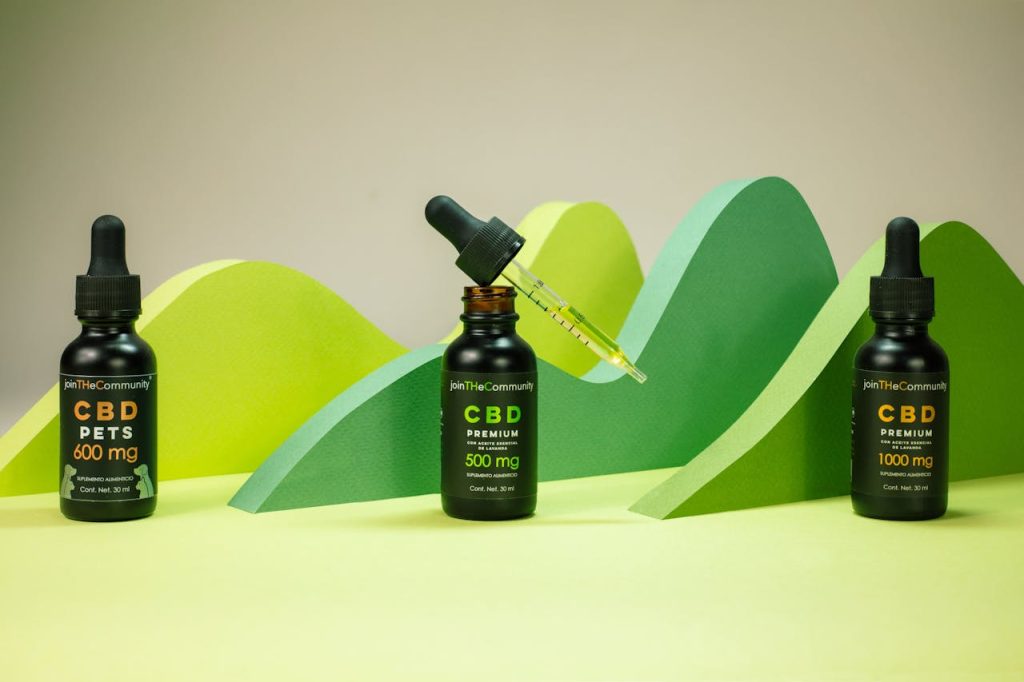

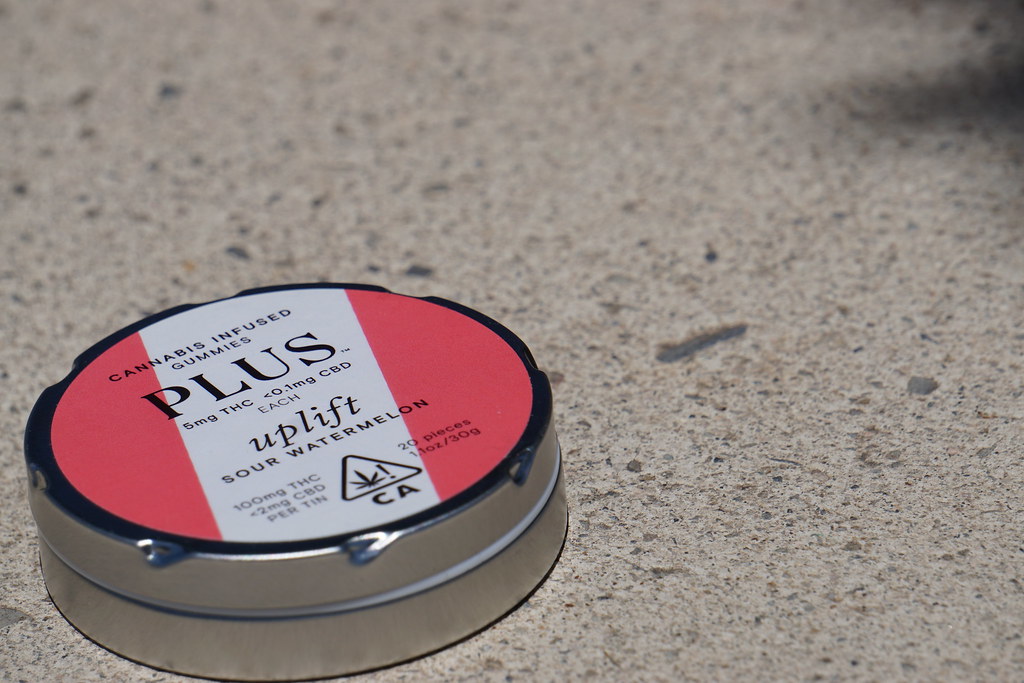
 In today’s busy world, maintaining good health has become more challenging than ever. Long working hours, irregular eating habits, and limited physical activity often lead to low energy, weight gain, and stress. Many people think staying fit requires strict diets or intense workouts, but true health is much simpler than that. It comes from building small, consistent habits that support your body every day. When fitness, nutrition, and overall wellness come together, they create a strong foundation for a happier and healthier life.
 True wellness goes beyond just exercise and diet. Healthy living also includes proper sleep, stress management, and mental well-being. Getting enough rest allows the body to recover and recharge, while managing stress keeps both the mind and body balanced. Simple habits like maintaining a routine, spending time outdoors, and practicing mindfulness can make a noticeable difference in daily life. These small changes may seem minor, but over time they create lasting improvements in overall health.